

Automobiles are a fairly recent invention, and most of their initial production and development took place in the United States. From the mid 1890s through today, cars, trucks, and SUVs have undergone many iterations and innovations. In this article, we’ll take a brief look at the history of American automobiles.
The First American Automobiles
The vehicle credited as the first ever automobile actually comes from a German engineer named Karl Benz. It’s the Benz Patent-Motorwagen from 1885. And if the name “Benz” sounds familiar, you likely recognize it from Mercedes-Benz, a luxury car group that still produces automobiles to this day.
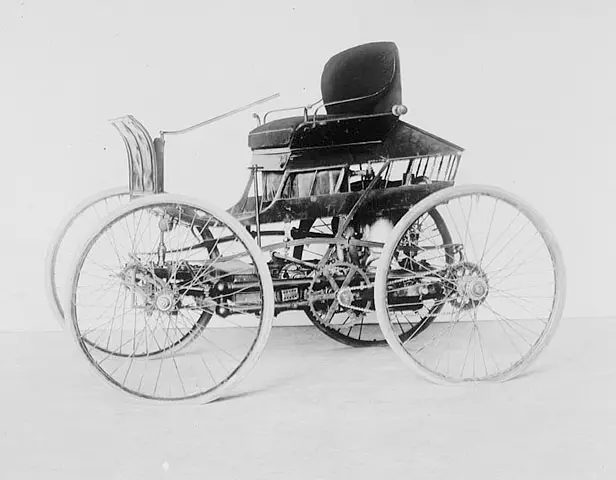
The Benz Patent-Motorwagen led to some early American models like the Haynes Car from 1896 and the first Oldsmobile in 1897 (pictured below). After these came the Ford Model T.

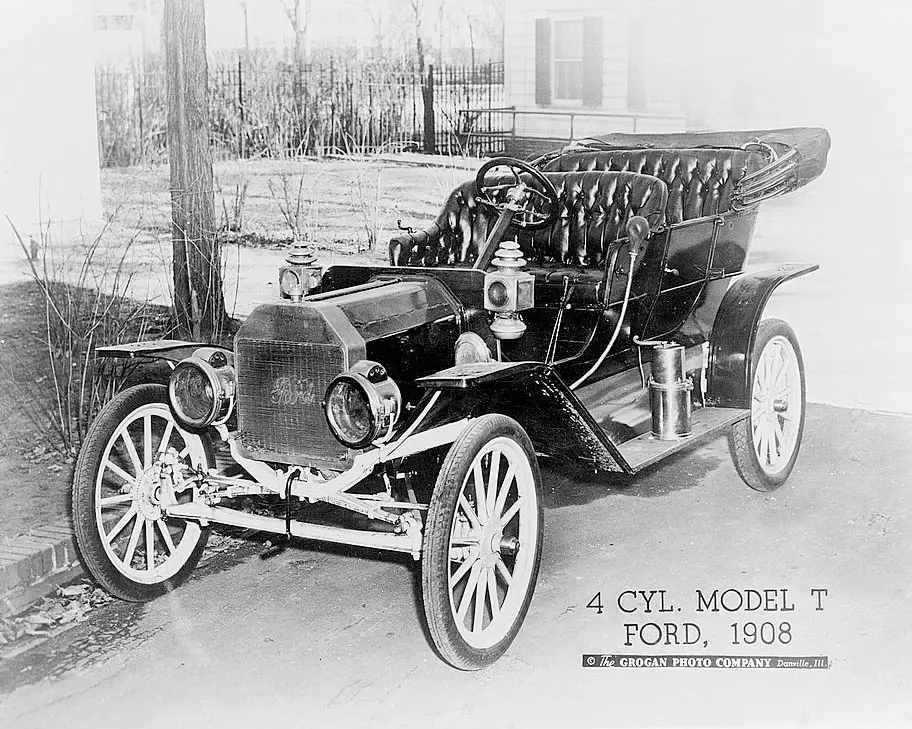
Henry Ford is often considered the father of American cars. While his company was not the first to utilize production lines, it was a pioneer in perfecting it. Ford also paid employees well enough to afford the cars they were making, keeping turnover rates at a minimum and creating a market for his vehicles. This led to great success for Ford. By 1918, half of the cars in America were Model Ts.
Around this time a few more popular car brands rose to prominence, including Chevrolet, Chrysler, and General Motors. General Motors was founded in 1908 and quickly acquired Buick, Oldsmobile, Oakland (Pontiac), and Cadillac. Unlike Ford, GM focused on creating cars that served as status symbols. Their cars came in different colors and at different price points.
As cars rose in popularity, America saw shifts in both culture and infrastructure. Sunday drives became a popular pastime. Dirt roads, which would often become undrivable in rainy weather, led to roads made of cobblestone, wooden paving, tarmac, and eventually asphalt.
The Great Depression and World War II
The 1930s brought major financial burdens to the American people. This, of course, impacted all areas of life in the U.S., including the automotive industry. Many companies that had grown and developed important technology in the early 1900s began to fold. Still, automotive advancements were made. Some of the biggest automative innovations from the 1930s include:
- Automatic and Semi-Automatic Transmissions
- Hydraulic Brakes
- Independent Front Suspension
- Overhead-Valve Engines
- Air Conditioning
At the end of 1941, the U.S. joined World War II and the automotive industry shifted focus. By February of 1942, all production of passenger vehicles had halted to make way for military equipment and weaponry. Factories grew and so did the number of factory workers. In addition to tanks, trucks, and aircraft, Jeeps were developed and produced at this time.

Post War Period and The 1950s
During the 1930s and 1940s, automotive workers began to seek fair pay and better working conditions. A union was formed—The United Automotive Workers Union—and changes were made to better provide for employees. Later in the 1940s, automotive production began to ramp up again and cars were seeing a variety of innovations and design changes. The World Fair was a popular location to showcase these new designs.
By the 1950s, cars in the U.S. began to get bigger and more colorful. Most European roads were too narrow to accommodate them, and several countries were still recovering from the war. This led to less global exports and more automotive development in countries like Germany and Japan, which would later impact the American automotive industry.
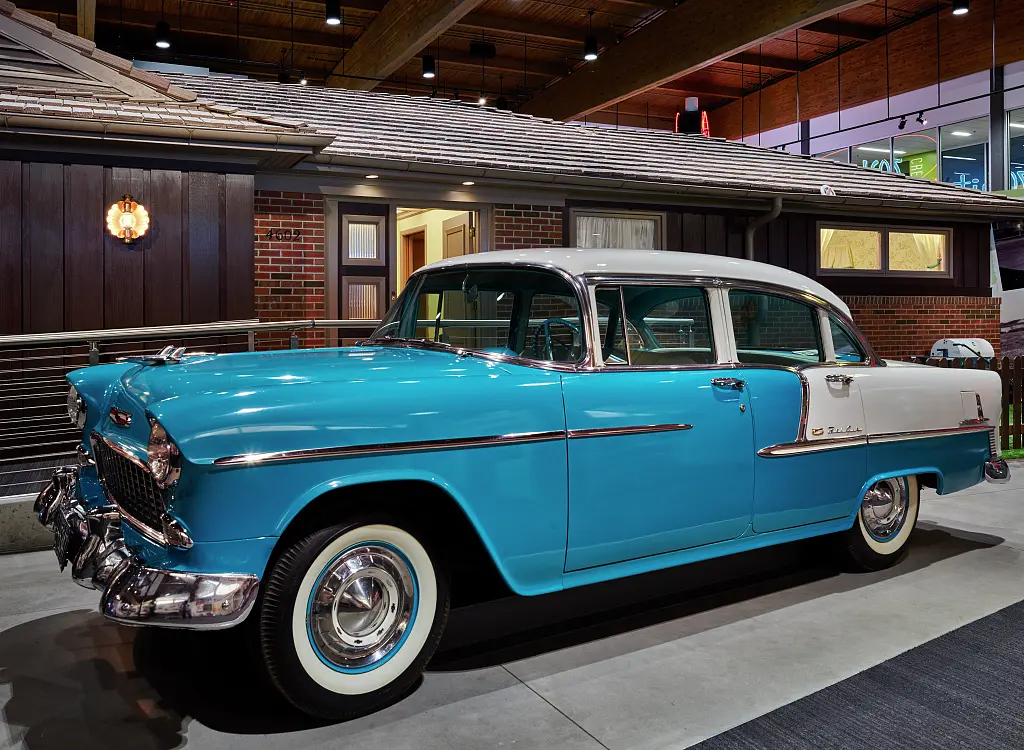
American suburbs began to grow during this time. More cars meant more travel was possible, and it opened the door for those who wanted to live outside of major cities to still work within them. Highways were built to accommodate more travel, which led to the popularity of motels (the “motorists’ hotel”), drive-in theaters, drive-thru restaurants, and eventually the shopping mall. One-room schoolhouses were replaced by large, public schools that bussed children together to one location.
The Big Three of the 1960s
The 1960s was probably the golden age of the American automotive industry. Ford, General Motors, and Chrysler were all at the top of their game, producing approximately 93% of cars in the United States and approximately 48% of cars in the global market. Muscle cars grew in popularity, replacing the colorful, winged cars of the 50s with simpler, more powerful options. Some notable cars to appear in the 1960s include the:
- Ford Thunderbird
- Buick Riviera
- Cadillac Eldorado
- Ford Mustang
- Pontiac GTO
- Chevrolet Camaro
The Rise of Foreign Imports
Things really shifted in the automotive industry after the 1960s. The 1970s saw labor strikes, economic changes, energy crises, and an increase in international competition. American buyers shifted their focus from performance to safety and fuel economy. By the 1980s, European, Japanese, and Korean imports took over nearly a quarter of the market in the U.S. Still, some advancements were made.
Compact and sub-compact cars were introduced to compete with smaller foreign imports, including the Ford Pinto, Ford Maverick, Chevrolet Vega, AMC Gremlin, AMC Hornet, and AMC Pacer. Unfortunately, many of these cars had design problems. As the 80s continued, the Big Three joined forces with Japanese manufacturers through investments and joint facilities. Ford and Mazda teamed up. Chrysler began working with Mitsubishi. And GM invested in Suzuki, Isuzu, and Toyota.
Chrysler introduced the minivan in 1984 through both the Plymouth Voyager and Dodge Caravan. Both were very popular. In addition to that, the 80s also gave us disc brakes, fuel injectors, electronic ignition, and the standardization of front-wheel drive.
In the 1990s, U.S. car manufacturers developed the SUV (Sport Utility Vehicle). It was big, it was exciting, and it briefly provided the hope that U.S. manufacturers might take back the top automotive spot. Unfortunately, as fuel prices rose, the demand for smaller vehicles rose with it. While SUVs remain on the road today, they haven’t been enough to tip the scales.
BMW, Daimler-Benz, Honda, Hyundai, Kia, Nissan, Toyota, and Volkswagen all started plants throughout the U.S. during this period.
Recessions and Electric Cars
More recent automotive history has been shaped by the 2008 recession and a growing interest in hybrid and electric vehicles. The Big Three took some big hits in the early 2000s, with both GM and Chrysler declaring bankruptcy. They received government bail outs, and through some major restructuring, they’ve both managed to stick around. Ford also saw major downsizing, but they did not request government assistance.
The Big Three have changed considerably since then. They’re also no longer at the top of the U.S. automative sales—at least, not by themselves. Toyota has climbed the ranks, becoming the third most popular car brand in the U.S., after GM and Ford, and before Chrysler. In 2014, Chrysler merged with Fiat, becoming Fiat-Chrysler. GM sold off European brands, closed several plants, and no longer manufactures cars in Australia or Uzbekistan. Ford did away with all passenger cars in 2018, except for the Ford Mustang. They now exclusively sell trucks and SUVs. GM made a similar move, discontinuing passenger cars in 2022.
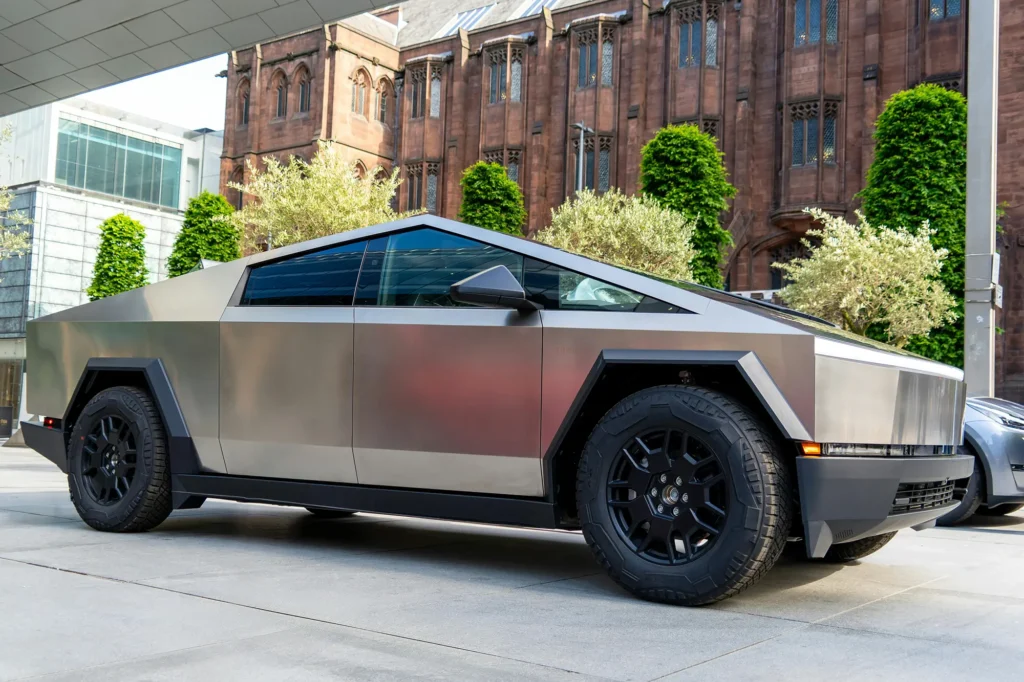
Hybrid and fully electric vehicles have grown in popularity, bringing brands like Prius and Tesla to the forefront of some consumers’ minds. Since 2020, Tesla has become the most valuable automotive manufacturer in the U.S.
Automobiles in America
Despite the rise and fall of several automotive brands, cars continue to be a staple of American life. In the early 1900s, manufacturers hoped every American household would own at least one car. In 1908, only about 1% of households had a car. That number rose to 50% by 1948 and 75% by 1960. As of today, an estimated 92% of U.S. households have at least one car, with many owning two or more to accommodate multiple drivers in the house. We still have a robust infrastructure, successful motel chains, popular gas stations, and other businesses that benefit from the automotive industry, including Restored Auto, LLC.
If you’re one of the 92% of American households that owns a vehicle, Restored Auto, LLC can help you maintain it. We can help with an oil change, a tire rotation, or even something as complex as a transmission repair. Call us today to schedule an appointment.
All photos sourced from the Library of Congress and Pexels.