
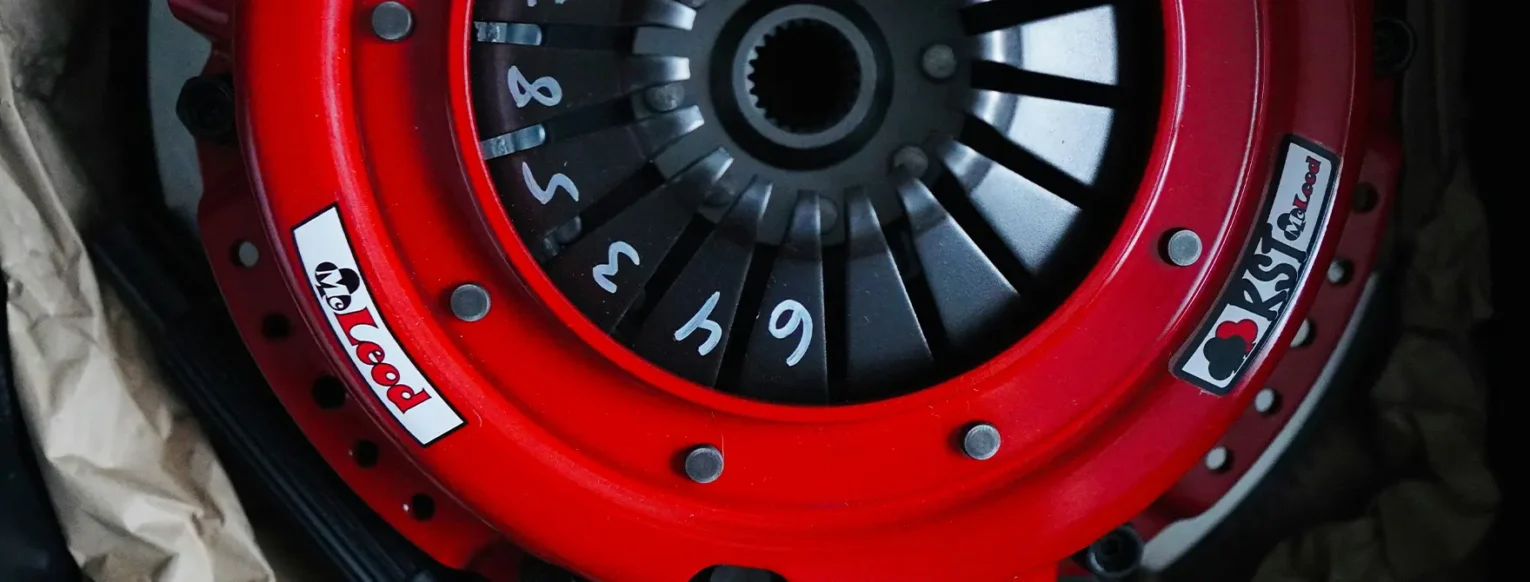
A clutch is a component that connects your engine to your transmission and allows you to shift gears. Clutches can be found in both manual and automatic cars, though there are some differences in how they operate. Automatic drivers won’t have to think much about their clutch, but manual drivers will directly engage it through the clutch pedal.
Clutch System Parts
The clutch system is made up of several parts including:
- The Clutch Disc—The clutch disc can be found between the flywheel and the pressure plate. The clutch disc is what transfers power from the engine to the transmission.
- The Flywheel—The flywheel is a disc connected to the engine crankshaft. Flywheels help to balance and store energy from the engine. The clutch disc will press against the flywheel to transfer that engine power.
- The Pressure Plate—The pressure plate is responsible for pressing the clutch disc against the flywheel. The pressure plate helps to ensure engine power is completely transferred to the transmission.
- The Release Bearing—The release bearing, sometimes called the throw-out bearing, engages and disengages the clutch.
Hydraulic Clutches
Newer manual vehicles tend to rely on hydraulic clutch systems that use fluid pressure to engage or disengage the clutch. These systems have additional components including the master cylinder, the slave cylinder, and the hydraulic line. Hydraulic clutches tend to be smoother than mechanical clutches and make for easier pedal presses.
Common Clutch Problems
Because there are multiple parts at work, and most of the parts involve either the use or prevention of friction, there are multiple ways in which a clutch can fail.
Slipping Clutch
A slipping clutch is often caused by a worn clutch disc or a problem between the pressure plate and the flywheel. Signs that your clutch is slipping can include a loss of power on hills, engine revving without acceleration, or a burning smell. Slipping clutches are often caused by normal wear and tear as the friction material wears off of the clutch disc. They can also be caused by aggressive driving habits, a poor adjustment, or oil leak contamination.
Sticking Clutch Pedal
If your clutch pedal feels stiff and hard to press, or it won’t return smoothly after you press it, this is a sticking clutch pedal. It can make it difficult for your car to shift gears, which can be dangerous when you’re out on the road. Sticking clutch pedals can also cause damage to the transmission. Most clutch pedals start sticking when there is some kind of contamination on them (oil, grease, other fluid leakage). It can also be caused by worn clutch linkage or issues with the hydraulic system.
Strange Clutch Noises
When everything is functioning correctly, there shouldn’t be much noise coming from your clutch system. If you hear a grinding, squealing, or rattling, this means something is wrong. Grinding often indicates a worn release bearing, squealing is often a problem with the pilot bushing or pilot bearing, and rattling can be a loose component or a problem with the clutch disc. Whatever the case, don’t ignore a strange noise from your clutch.
How to Prevent Clutch Problems
Clutch problems can be caused by a number of things. The problems that arise from normal wear and tear can often be addressed by routine maintenance. By having your car regularly serviced, you’ll have a better chance of catching issues before they become issues and preventing them.
Other causes of clutch problems include aggressive driving habits, towing heavy loads, and riding the clutch pedal. All of these things can cause the clutch system’s components to wear down faster. Try to drive smoothly, without making a lot of harsh stops and starts. Consider shorter intervals between routine maintenance if you have to tow a lot of things. And try not to ride the clutch pedal when you don’t have to.
Call Restored Auto, LLC for help with your clutch.
If you need parts in your clutch system repaired or replaced, call Restored Auto, LLC. Our mechanics will work hard to diagnose the problem and find the best solution for your vehicle and your budget. Call us today to schedule an appointment.