
Horns are an important safety feature in any vehicle. They allow you to communicate with other drivers and pedestrians so you can avoid accidents or other issues while you’re on the road. Car horns may also be incorporated into vehicle alarm systems (panic buttons) to help protect against theft or locate a vehicle in a large parking lot.
If your car horn has stopped working—if it’s not making any sound, if it sounds weak, or if it’s blaring on its own—there are several possible reasons why. In this article, we’ll cover some of the most common reasons your car horn isn’t working.
1. Bad horn relays
The horn relay controls the horn’s power supply. It acts as a channel that gets electricity from the battery to the horn. If the relay isn’t working, the horn won’t get the power it needs to sound. Horn relays can wear out over time. They may also become corroded or damaged by water or other leaks in your vehicle. If the relay is causing your horn problem, you’ll probably hear a clicking sound when you try to press horn, but no horn sound. The horn may also sound weak or work periodically. There are also some cases where the horn may sound on its own while the car is parked and you’re not using it. Whatever the case, a faulty horn relay should be repaired or replaced.
2. Faulty Horn Switches
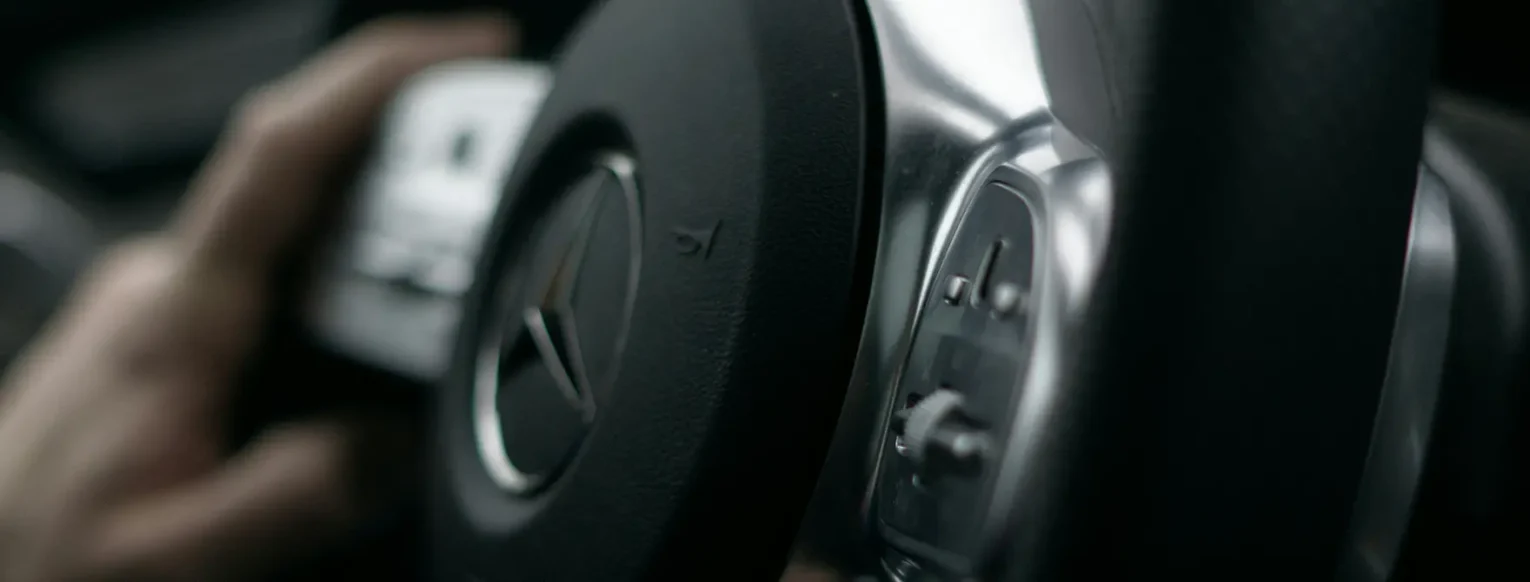
The horn switch refers to the button on your steering wheel that you press to activate the horn. This can wear down over time and may wear out faster with frequent use. Slamming on the horn switch can damage it. If the horn switch is the problem, you may notice that the horn only works when you push the switch at certain angles. You may also notice all of the other electrical components working fine while the horn doesn’t work. If there is an airbag light lit on your dashboard, this can indicate the horn switch, but it may also indicate a deeper problem in your steering column. You can fix your horn switch by replacing it with a new one.
3. Blown Fuses
Blown fuses are probably the simplest cause of your horn problem. Because horns need a steady supply of power to work, electrical problems may sometimes send too big of a current to the horn and blow the fuse. If the car horn’s fuse has blown, you won’t hear any sound when you press on the horn switch. Other electrical components will likely still be working as they are connected to other fuses. The horn’s fuse may appear burnt or broken when you look at it. Replacing a blown fuse is fairly easy. You just have to locate the fuse box and replace it with a new one. If the fuse blows a second time after replacing it, this may be a sign of a bigger electrical problem in your vehicle.
4. Loose or Damaged Wiring
As with most electric-powered things, car horns rely on wiring to receive the power they need. The wires run between the horn relay and the horn itself. If those wires break, corrode, or come loose, the power supply will be cut off and the horn won’t work properly. Signs that the wiring may be the problem include the horn working sporadically, no sound or weak sound when you press the horn switch, and other electrical issues in your steering column, like light or wiper problems. To fix damaged or loose wiring, you should have the connections inspected and the wires checked for signs of damage.
5. Problems with the Clock Spring
The clock spring is a component in your car’s steering column that allows electrical signals to continue as you turn the steering wheel. This can give power to the horn, along with steering wheel controls and your vehicle’s airbag. Like most other car parts, clock springs can wear out over time. If the clock spring is the blame for your horn problems, you may notice the airbag light is on on your dashboard. You may also notice issues with steering wheel controls, like cruise control or radio controls. The clock spring is an important part for both electrical function and driver safety. If a broken clock spring prevents an airbag from deploying, that can lead to major injuries in the case of a collision. It’s important to take your car to a trusted mechanic to have the clock spring repaired or replaced. This particular part is best handled by a professional because incorrect handling can set off the airbag.
6. Incompatibility with Aftermarket Parts
Aftermarket parts can be a great way to save money, but only when they work with your car. If you’ve recently installed an aftermarket part, like a remote starter, and now the car horn is either not working or working too well (like going off on its own), this is a sign of incompatibility. Luckily this is a simple enough fix. You just need to swap the incompatible part with a compatible one. If the horn issues persist after this, check the wiring, the horn relay, and the horn itself to see if those things are causing it.
7. Faulty Horn Units
The final cause we’re going to cover in this article is faulty horn units. If, after checking everything else, the car horn still doesn’t work, the problem may be with the horn itself. While horns can last for a very long time, they aren’t guaranteed to last for the life of the vehicle, and they can wear out or become damaged. If you’re a frequent horn-user, your horn unit may wear out faster. If your car has been in a collision, this can also damage the horn unit and keep it from working properly. If the horn unit is the problem, you can fix it by replacing it with a new horn.
Call Restored Auto, LLC for help with your car horn.
One of the best ways to prevent horn issues is regular vehicle maintenance. Regular battery changes and regular vehicle inspections can help you to catch small issues quickly and avoid having them turn into bigger issues. The mechanics at Restored Auto, LLC are happy to help you maintain your vehicle and repair it when necessary. Call us today to schedule your maintenance or horn repair.