
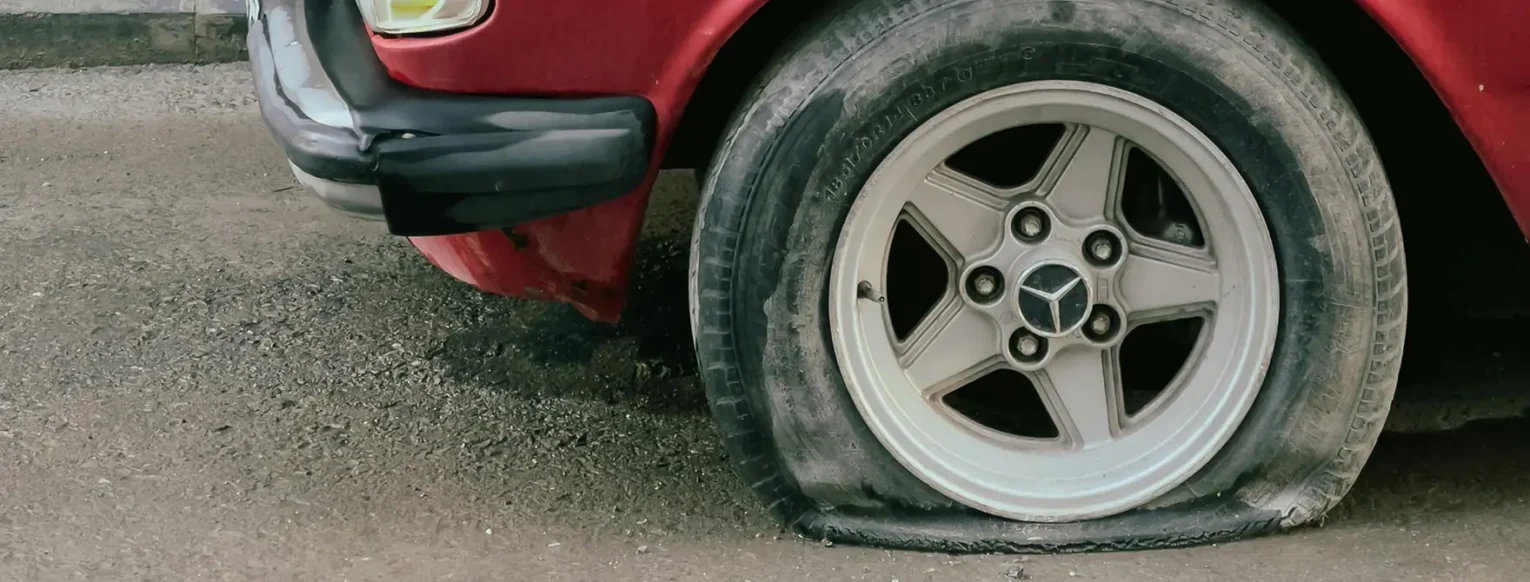
Flat tires are a very common problem faced by drivers. They can occur while you’re driving. You may notice a flapping noise or feel your vehicle pulling to one side. They can also occur when you’re parked. You may step outside to find your car leaning to one side. No matter when they happen, there are a few ways to handle a flat tire.
When You’re Driving…
If you notice a flat tire when you’re driving, it’s very important that you pull over as soon as possible. Try to pick a spot away from traffic and give yourself enough room to work on your tire. You may have to drive a little before reaching a safe spot. If you do, keep your speed low and put your hazards on. Driving on a flat tire can be dangerous, so don’t go too fast or too far.
When You’re Parked…
If you notice a flat tire when you’re parked, try to repair or replace it before driving. Check your surroundings before working on your tire. If you’re in a safe area away from traffic, you can begin working. If you’re not in a safe area or if you’re too close to traffic, call someone for help.
Replacing a Flat Tire
The most obvious solution to a flat tire is to replace it. Most cars come with a spare tire. They’re often located in the trunk, on the back of the vehicle, or underneath the vehicle. If you don’t know where or if you have a spare tire, your vehicle’s owner’s manual can help. It’s important to note that some spare tires may be a compact spare, making them smaller than your other tires. Spare tires should always be a temporary solution, and this is especially true when the spare is compact.
Once you’ve located the spare, it’s time to change the tire. You may want to call for help. You can call a friend, family member, or roadside assistance when you need to change a tire. If you’re doing it yourself, be sure the car is in park and the parking brake is engaged. If you’re near a roadway, turn on your hazards so your car is visible to other drivers. Locate the jack (this is often with the spare tire). Loosen the lug nuts but don’t remove them yet. Jack up the car until the wheel is off the ground and then remove the lug nuts and the flat tire. From there, you can install the spare and put the lug nuts back on by hand. Once your car is lowered and the jack is removed, tighten the lug nuts with a tire iron.
Depending on the cause of your flat tire, you may be able to have it repaired. You may also need to purchase a replacement tire. Either way, once the spare tire is on, you should be able to safely drive to a mechanic or service station.
Repairing a Flat Tire
Some newer cars come with a tire plug kit meant for repairing flat tires. This can help you to stay mobile long enough to get your car to a service station. Like a spare tire, a tire plug is only meant to be a temporary solution. Permanent tire patches need to have a patch and a plug on the inside of the tire. This type of fix is often more extensive than what you can do with a tire plug kit.
If you’re using a plug kit, you’ll need to start by locating the leak in the tire. Sometimes tires spring a leak after hitting a nail or other road debris. You may be able to see the leak with a visual inspection. If you can’t find it, you can try inflating your tire and listening for a hissing sound where the air is leaking out. Once you’ve located the hole, loosen the lug nuts without removing them. Jack up the car until the wheel is off of the ground. Remove the lug nuts and wheel. Clean the hole with the rasp tool, which should be included in your repair kit. Once it’s clean, you can add adhesive to the plug and insert it into the hole. Allow the tire to sit for a few minutes so everything can set. Then, reinflate the tire and reinstall it on your vehicle. You should now be able to safely to drive to a service station.
Why You Should NOT Drive on a Flat Tire
Driving on a flat tire is dangerous for both you and your vehicle. Underinflated tires can make handling difficult. They won’t work as well in bad weather, either, as they cannot properly grip the road. It may be harder to break, turn, and perform other normal vehicle functions.
In addition to the safety risks posed by driving on a flat, you also risk damaging your tire and car. Some flat tires can be repaired, but if you drive on a flat for too long, the inner structure will degrade and become irreparable. Depending on how flat the flat tire is, you will eventually be driving on your rim. This can damage your rim. You also risk damage to the brake lines, rotors, fenders, and suspension, all of which can make your vehicle even less safe to drive.
Can flat tires be prevented?
Sometimes flat tires can be prevented. Flat tires are often caused by potholes, sharp objects in the road like nails, poor inflation, poor driving habits, or general wear and tear. Driving safely and keeping your tires properly inflated can help to maintain your tires and lower your risk of a flat. Keeping your car properly aligned and regularly rotating your tires can also help.
Call Restored Auto, LLC for help.
If you need a flat tire repaired or replaced, Restored Auto, LLC can help. We’ll work with you to get your car safely back on the road. Call us today to schedule your tire replacement or repair.